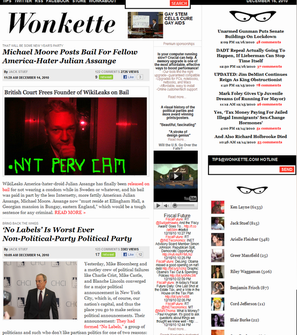
The Genesis of Gossip: Wonkette's Gawker Beginnings
In the vibrant, sometimes chaotic, landscape of early 21st-century online media, a new voice emerged in January 2004, destined to carve a unique niche in political commentary. Born under the wing of Nick Denton’s influential Gawker Media, Wonkette, an American online magazine dedicated to topical and political gossip, was a pioneer in what would become a pervasive genre. Its foundation marked a significant moment, blending the irreverence of internet culture with the high-stakes world of Washington D.C. politics.
The site's initial success was largely attributed to its founding editor, Ana Marie Cox, a former editor at the cult-favorite online publication, suck.com. Cox brought a sharp wit and an innate understanding of the internet's power to rapidly establish a substantial readership and garner significant media attention for Wonkette. Her tenure was marked by a distinct, often snarky, style that resonated with an audience hungry for an alternative to traditional political reporting.
A pivotal moment in Wonkette's early history, and one that cemented its reputation for breaking unconventional stories, was Cox's publicizing of Jessica Cutler, famously known as "Washingtonienne." Cutler, a former Hill staffer, had anonymously blogged about her affair with a member of former Senator Mike DeWine's staff. Wonkette’s role in bringing this story to national media attention underscored its ability to blend political intrigue with a voyeuristic peek behind the curtain, setting a precedent for its unique brand of journalism.
Cox’s departure in January 2006, to promote her book Dog Days, ushered in a series of editorial transitions that tested Wonkette's foundational strength. David Lat, author of the federal judiciary blog Underneath Their Robes, and Alex Pareene, a young Gawker intern and NYU student, stepped into the editorial roles. While Pareene later moved to the flagship Gawker site and then to Salon, Lat’s subsequent departure in June 2006 led to a period of guest editors before the long-term political blogger Ken Layne took the helm in August 2006. This period, particularly during the 2006 midterm elections, saw Wonkette reach its largest pre-2008 audience, fueled by its aggressive coverage of scandals involving figures like Mark Foley and other incumbents embroiled in corruption, sex-abuse, and bribery allegations. The Gawker era defined Wonkette’s initial brand, establishing its irreverent tone and the crucial role of a strong editorial voice in capturing a niche audience.
From Editorial Shifts to Digital Dominance
The late 2000s continued to be a period of flux and growth for Wonkette. After Pareene and Layne’s second departure in October 2007, Gawker management installed a new team, including John Clarke, Jr. and Megan Carpentier. However, Gawker publisher Nick Denton, recognizing Layne's impact, brought him back as sole editor two months later. Layne, in turn, assembled a formidable team featuring talents like Jim Newell of IvyGate, videographer Liz Glover, former Gawker blogger Sara K. Smith, Juli Weiner of Columbia literary magazine The Blue and White, and long-time contributors Princess Sparkle Pony (Peter Huestis) and Josh Fruhlinger, the Comics Curmudgeon.
This dynamic team proved instrumental in Wonkette's continued relevance. They provided engaging coverage of major political events, including both the Denver DNC and St. Paul RNC conventions. Newell and Fruhlinger also covered Barack Obama's inauguration in Washington, a period during which Wonkette, like many political websites, saw its readership hit new records between the November 2008 election and the January 2009 inauguration. This era solidified Wonkette's ability to not only comment on the political landscape but also to actively participate in shaping the online discourse around it.
Rebecca Schoenkopf: A New Era of Independence and Unfiltered Commentary
While the exact transition from Gawker Media's direct ownership is not detailed in the public record, a pivotal shift occurred around 2012 with the arrival of Rebecca Schoenkopf as editor. Schoenkopf, formerly of OC Weekly, didn't just step into an editorial role; she eventually became the owner of the website, marking a profound evolution in Wonkette's operational model and editorial independence.
Under Schoenkopf's stewardship, Wonkette has not merely survived but thrived, cementing its position as a distinctive voice in political commentary. Her ownership has allowed for an even more unvarnished and distinct editorial identity, free from the corporate influences that might accompany a larger media conglomerate. This independence is not just philosophical; it's fundamental to its business model. Wonkette's Unconventional Model: Satire, Profanity, and Donations is a testament to this, as the site eschews display advertising entirely, relying instead on donations from its readership. This financial independence directly underpins its editorial freedom, allowing it to maintain a powerful, unfiltered voice without external pressures.
Schoenkopf's influence is evident in Wonkette's editorial stance: it maintains a very strong liberal bias, consistently mocking Republicans and conservatives. The site is characterized by its use of sharp sarcasm, often employing loaded emotional language and profanity to denigrate the right. Stories are frequently highly negative towards conservatives, particularly during the Trump administration, often adding biased commentary to support a liberal narrative.
This approach isn't for everyone, but it resonates deeply with its target audience. Wonkette has perfected a hybrid model, seamlessly blending satirical content with factual news reporting. This blend allows it to engage readers on multiple levels, offering not just information but also a strong, often provocative, viewpoint. The editorial team under Schoenkopf, benefiting from this unique setup, continues to deliver content that challenges, entertains, and, at times, enrages, all while staying true to its core mission of providing irreverent political analysis.
Understanding Wonkette's Unique Editorial Stance
- Unapologetically Liberal: Wonkette's strong liberal bias is not hidden; it's a core part of its identity. Readers know exactly what perspective they are getting.
- Mastery of Satire: The site excels at using humor, irony, exaggeration, and ridicule to expose and criticize perceived flaws in conservative politics and politicians. This isn't just snark; it's a strategic rhetorical tool.
- No Holds Barred: From loaded language to occasional profanity, Wonkette's style is direct and often confrontational. This raw authenticity appeals to readers seeking an unfiltered voice.
- Donation-Driven Freedom: The reliance on reader donations rather than advertising revenue provides unparalleled editorial freedom, allowing the site to pursue stories and adopt tones that might otherwise be constrained.
Two Decades of Dissent: Wonkette's Enduring Legacy
Two decades is a significant milestone in the fast-paced world of online media, and Wonkette's journey from a Gawker experiment to an independent, donation-supported powerhouse of liberal political satire is a remarkable one. Its ability to adapt, evolve, and consistently deliver content that resonates with its audience speaks volumes about its enduring relevance.
Wonkette has proven that there is a substantial appetite for political commentary that dares to be different – that is not afraid to be partisan, satirical, or even crude, in its pursuit of engaging with the political landscape. The website's continued success under Rebecca Schoenkopf highlights the power of a strong, consistent editorial voice and a unique business model that prioritizes editorial freedom above all else. In an increasingly polarized media environment, Wonkette remains a beacon for those who appreciate sharp wit, critical analysis, and an unwavering commitment to its distinct liberal perspective.